Isolate and thrive

By Alice Mantel

In this uncertain period, we may have increased the physical distance between each other but we can still be socially connected. It might just require more motivation (and self-discipline to use the words of one very important person).

Here are my suggestions about how to make the most of this enforced retreat from the busy world:

Daily rituals – find a special way to welcome the morning, or the approaching night, perhaps just by paying attention in silent stillness.

Enjoy the solitude – doing things that you like, You could read a book (including downloading a digital version from your library), listen to podcasts, play loud music, take up an instrument you have ignored for a while, flip through photo albums or dance while no one is watching. You could even write your memoirs.

Connect with others – call friends and contacts, by phone or with video calls, or celebrate your special days by hosting an online party. Do a jigsaw puzzle with a family member. Call Lifeline on 13 11 14 if you don’t feel in control of your mental stress or anxiety.

Share – your recipes, your patterns, your ideas – through a curated social media diet or a blog your own thoughts. Use digital media to stay informed.

Create something new – take up painting, sewing, pottery making, knitting again. Find a live streamed class to join. Cook new meals or cakes that you have always wanted to try.

Develop your sense of purpose – reach out and support your neighbours, your school, or disadvantaged groups by volunteering, donating money or following their media posts.

Revise and re-evaluate the obvious – what is in your cupboards, your bookshelves, your kitchen pantry, or your bottom drawers?

Stay active – participate in online classes like yoga or dance classes, walk/run in the fresh air in local parks, breathe deeply on your balcony, set up a home gym using items found around your home, or take up golf or tennis.

Care for yourself – catch up on some sleep, rationalise your old clothes, give yourself an organic facial, throw out old makeup, dress to impress yourself.

Go gardening – pruning, weeding, planting, reorganising your pot plants, buying more plants, mulch and fertilise.

Avoid– non-essential online shopping, too much couch time watching streamed movie marathons, and drinking more alcohol to pass the time.
Six minutes interview

This story appeared in the March 2020 issue of the NSW Law Society Journal:

BY AMY DALE – FEB 27, 2020

Alice Mantel is an experienced lawyer and adviser on the challenges that many women encounter during retirement. She talks about family law, homelessness, and why just planning one big overseas trip won’t cut it for the final third of your life.

What experiences as a lawyer shaped your decision to advise on planning for retirement?
I spent around 10 years practising family and then elder law. In family law particularly, I was surprised and then concerned about how little many of my clients knew about their own personal financial circumstances. Often, they did not know if their name was on the title of the property, or how much was owed on the mortgage or credit cards. Again, when acting for older clients, often they left making their wills or power of attorney until very late, when there was pressure from their children, which, as you can appreciate, is a very difficult situation for any lawyer. It brought home to me that women need to be prepared much sooner for the unexpected.

What inspired you to write your book, Every Woman’s Guide to Retirement?
I started writing this book before I retired. I was initially doing research to answer my own questions. Years ago, when placing my mother into a nursing home, I realised how difficult it was to find any sensible information to assist me. More recently, I wanted some guidance when I was thinking about closing my practice. After a while, I decided that most books or articles did not seem very relevant to me. They were often very friendly but aimed at chaps who were fairly well off or aimed at women who presumably intended to spend the last third of their life on continual holidays. My research gradually grew into a book that is far more extensive than I had ever contemplated and includes mundane topics like accessing your pension as well as more interesting options such as lifelong learning or starting a new relationship.

What issues specifically apply to women? Bulk of carer responsibilities, less superannuation, longer life span?
I see retirement as very different for women than men. Generally, women are the main carers for their parents, children, partners and grandchildren. At the same time, they come into retirement with significantly less financial resources but live on average five years longer. If they do not have enough resources, those last years are going to be close to living in poverty. It can be a very grim prospect if a woman’s health begins to suffer and there is not always the certainty that your children will be there to look after you.

Women aged 55 and above are the fastest-growing cohort at risk of homelessness. How can we do more to ensure financial security?
It is no surprise to me that older women are at risk of homelessness. It can begin if they lose their home in a divorce settlement and cannot recover financially, but also if they are unable to find work and remain unemployed, either as a result of their own or their children’s health issues. When super funds talk about having a modest retirement, or a comfortable retirement, there is always an unspoken assumption that the retiree owns their own home. That’s ridiculous and increasingly unlikely as recent figures have demonstrated. We need to make a secure home a realistic possibility for everyone.

What about social planning for retirement? How can people prepare themselves to leave the workforce and feel at ease that a happy and fulfilling future is still ahead of them?
Most women retiring today can expect to have another 20 years of relatively good health, so it simply isn’t enough to plan your one big overseas trip and think that’s all there is to it. For working women, one of the major issues around retirement is the loss of their work identity, the loss of income and the social connectedness that professional life brings. We need to plan at least a year ahead of retirement about how we can use our skills and experience in the non-employment sphere – and let me assure you, that is a very large sphere. There are so many not-for-profit agencies looking for directors on their boards or volunteers for their operations. Not having to follow a work routine means you can finally pursue your real passion – whether it is art, woodwork, or caring for your grandkids and even if it might take a little time to find what that is, it will give real meaning to the legacy you leave.

In conversation in Albury

Introducing Every Woman’s Guide to Retirement

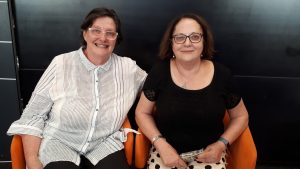
Sally Denshire and Alice Mantel in conversation in Albury LibraryMuseum
to Albury women was Dr Sally Denshire, a former CSU academic and Albury resident. Sally and Alice discussed how women’s approach to retirement was different to the usual male perspective. A case of “men retire, while women go on cooking”. Most of the 23 attendees were professional women who were concerned about organising their housing to be the most convenient and cost-effective for their later years. And – as could be expected – some were really looking forward to retirement while others wanted to delay it for as long as possible!